My Shortest Yet Most Luckiest Ladakh Trip
In search of India's most elusive cat — the Eurasian Lynx
I have been to Ladakh six times before this. Snow Leopard, Tibetan Wolf, Pallas's Cat, Black-necked Crane, Bar-headed Goose — I had covered most of the flagship species over the years. Ladakh had always been generous to me.
But there was one animal I had never even tried for. The Eurasian Lynx. Not because I wasn't interested — but because it felt almost impossible. It is probably the least-seen mammal in all of India. Most wildlife enthusiasts who visit Ladakh regularly haven't had a single sighting in their lifetime.
Then my inner voice started getting louder. "You never even gave it a try. You can't say you didn't get to see it — if you never tried."
So I decided to try. Just once. Just for the satisfaction of having tried.
The Plan
Due to the nature of my work, long wildlife tours are just not possible for me. Even if it means a money loss, I have to stick to short and multiple trips. So over the years, I have visited the same destinations many times — each time with one focused target.
My friend Surya connected me with local guides who knew the area well. The plan was simple and sharp — travel to the last known sighting location of the Lynx, scan the mountains through a spotting scope, and come back. No long drives between Hanle, Tso Kar and other places like my previous Ladakh trips. Just one location. One target. Point blank.
Then I Fell Sick
A week before the trip, I collapsed. Five continuous days of fever at 103°F. Severe cough and cold. I couldn't even stand properly. I was admitted to get large doses of antibiotics administered intravenously, because tablets were not working anymore.
I called the guides and postponed the trip by a week.
Somehow I recovered. Still weak, but just about able to travel. I packed all my medicines, carried a thermos flask, and boarded the flight. I travelled to Ladakh like a 70-year-old person. But I made it.
Day 1 — Acclimatisation
When I left Bengaluru, it was 28°C. By the time I reached the destination, it was −8°C. Day one was rest day — mandatory acclimatisation at high altitude. Hot soup, warm room, and quiet anticipation.
Day 2 — Into the Cold
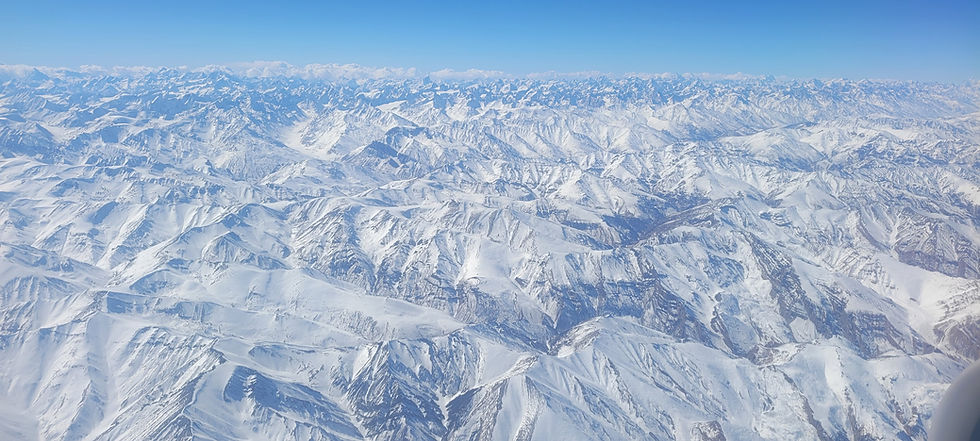
Next morning, we set off early. The guide took me to the spot where he had last seen a Lynx — about a month ago. The place was dramatic. Snow-peaked mountains on all sides. Not a single person around. Temperature at −14°C, and the wind making it even harder to stand outside. My thermal wear gave up, especially my shoes.

We set up the spotting scope and started scanning the cliffs. We saw a few Woolly Hares on the way. A couple of Magpies. A Chukar Partridge here and there. But no cat.
To add to the mood, there was another group of two people at the same spot. They had been there for 9 days straight searching for the Lynx. Nine days. And not a single movement, not a single sign.
I told myself — this is going to be a flop trip. I will be satisfied just for the sake of having tried. That's okay.

And Then — The Mountain Spoke
All of a sudden, we heard calls. Coming from across the mountains. Loud, haunting, and unlike anything I had heard before in any jungle.
I had no idea what it was. I had never heard a Lynx before. But the moment those sounds hit the air, both our guides froze. They looked at each other and immediately grabbed their scopes.
After a long anxious wait, the guide spotted something on the cliff face. A Lynx. Walking along the rocky ledge. The sighting lasted barely 2 seconds. It was far. But it was real. There it was.
I had heard two Lynxes calling. And seen one. No photographs, no close view — but what a moment.

What Were Those Calls? — The Science Behind It
Those haunting calls I heard were almost certainly mating calls. The timing was perfect — the Eurasian Lynx mating season runs from January to April. During this short window, both males and females become vocal, which is very unusual for this species. For the rest of the year, the Lynx is almost completely silent.
This is one of the only times you can detect a Lynx by sound. The calls carry far across Ladakh's open terrain, with males calling out to locate females who are in oestrus for just about a week. The fact that we heard two individuals calling from different directions strongly suggests a male was actively tracking a female nearby.
Without mating season, hearing a Lynx is nearly impossible. We just happened to be there at the right time.
The Rest of the Day
The whole day after that, we sat at the corner of the mountain road. Scanning, drinking hot tea from the thermos, eating snacks, scanning again. The Lynx didn't show again. But the atmosphere was electric the whole time.
We drove back as the sun went down. I slept well that night.
Day 3 — Zero Life Everywhere
We returned to the same spot the next morning. And it was as if the mountain had completely switched off overnight.
The previous day we had at least seen a few Woolly Hares, some Magpies, and Chukar Partridges. Today — nothing. Absolutely nothing. Not a single bird. Not a single mammal. Total silence across the entire area.
We waited. And waited. And waited.
The Descent
Later that afternoon, my guide suddenly stopped moving his scope. He stared. Adjusted. Stared again.
"There."
Far across the valley, a Lynx was actively descending a steep mountain face. Even at that distance, you could see it was moving with purpose — the long legs, the deliberate steps, the classic feline balance on rocks. I raised my camera. The shots were distant, but I had photographs of a wild Eurasian Lynx. I could not believe it.
Hats off to my guide's spotting skills. He picked up that cat from an extraordinary distance through his scope. I would never have found it on my own.

Meet the Eurasian Lynx — India's Rarest Cat
The Eurasian Lynx (Lynx lynx isabellinus) — also called the Central Asian Lynx, Himalayan Lynx, or Tibetan Lynx — is the subspecies found in Ladakh. Locally, the Ladakhi people call it Eeh or Ee.
It is the largest of all four lynx species in the world. In Ladakh, it sits as the second-largest felid, right between the Snow Leopard at the top and the Pallas's Cat at the bottom.
What makes this subspecies unique is its habitat. Most Eurasian Lynx subspecies live in dense forests. But this one has adapted to completely barren, open, rocky high-altitude terrain — exactly the kind of landscape you see in Changthang.
A few remarkable features:
Large, fur-covered paws that act like natural snowshoes — distributing weight on snow and ice
Long tufted ear tips that are not just for looks — they work like directional antennae, helping the Lynx pinpoint sounds of prey hiding under rocks or in crevices
Yellowish, faintly spotted coat that blends almost perfectly with Ladakh's ochre and grey rocky terrain — making visual detection nearly impossible
Long, powerful legs built for navigating steep cliffs and descending mountain faces at speed
Primary prey: Tibetan Woolly Hare, Royle's Pika, Himalayan Marmot, and occasionally female or juvenile ungulates.
Conservation status: Schedule I under India's Wildlife Protection Act — the highest level of legal protection. There is no confirmed population estimate for India as of today. It remains one of the least studied large mammals in the country.
The Moment of a Lifetime
After lunch, we were back to scanning. We were focusing on the boulder field where we had spotted Woolly Hares the previous day. The guide's theory was that the Lynx had come down to hunt, and it would likely target the hares near those rocks.
And then, without any warning, the Lynx appeared. Right next to the road. Close enough that we could see its face clearly without the scope.
It was hunting.

It was moving between boulders, checking the gaps, probing the crevices. It would disappear completely into a crack, come back out, circle, try another angle. Something was hiding in there — a Woolly Hare or a Pika most likely.
The Lynx didn't care about us at all. We watched it work for nearly 20 minutes from a safe distance. It was completely focused — methodical, patient, and absolutely in its element.
After about 20 minutes, the prey won this round. The Lynx gave up, turned around calmly, and walked back up the mountain. No frustration. No hurry. Just that quiet dignity of an animal that has all the time in the world.


Why the Lynx Was There — Ecology Explained
The Lynx's descent toward the valley and its hunting attempt near boulders made complete ecological sense.
The Eurasian Lynx is an ambush predator. Unlike cheetahs or wild dogs, it does not run prey down over long distances. Instead, it uses terrain — cliffs, boulder fields, rocky outcrops — as cover, moving silently into position before a short explosive charge.
Those tufted ears play a critical role in the hunt. The Lynx can hear prey moving under snow or hiding behind rocks — which explains exactly what we saw. It was listening and probing, using its ears as much as its eyes.
And there is a bigger ecological picture here too. By preying on Woolly Hares and Pikas, the Lynx helps regulate their populations. When hare numbers are kept in check, the high-altitude plants don't get overgrazed. This cascading effect keeps the entire Changthang plateau ecosystem in balance. The Lynx is a quiet architect of the landscape it lives in.
Shortest Trip. Biggest Luck.
I preponed my return flight and flew back to Delhi the next day for a personal visit. That was my shortest Ladakh trip ever.
I always used to crib about my luck with wildlife sightings. I miss things by minutes, I have to make multiple visits to the same place just to get a decent look. Four trips to the same forest for one owl. That is how it usually goes for me.
This one was different. The rarest mammal in India. One wild try. Heard two calling on Day 2. Photographed one descending the mountain. Watched one hunt up close for 20 minutes on the same day. Done in 2 days.
The trip started at its lowest — poor health, hostile weather at −14°C, a group that had found nothing for 9 days ahead of us. No reason for hope at all.
It ended as the best wildlife experience I have had in years.
I slept like a baby that night.

A Note on Conservation
The Eurasian Lynx in India is in a strange situation. It is protected under the highest category of India's Wildlife Protection Act. Yet there is no confirmed population estimate, no comprehensive study, and very little awareness even among wildlife enthusiasts.
Most recorded sightings in Ladakh are brief and accidental. The species is so elusive that even researchers struggle to track it — it buries its scat like a domestic cat, making sign-based surveys extremely difficult.
What we do know is that its population is believed to be declining. Retaliatory killing for livestock predation, prey depletion, and habitat disturbance are the main threats — along with the simple fact that nobody is studying it closely enough.
If you visit Ladakh, keep your eyes on those rocky cliffs. You never know what's watching you back.
Comments